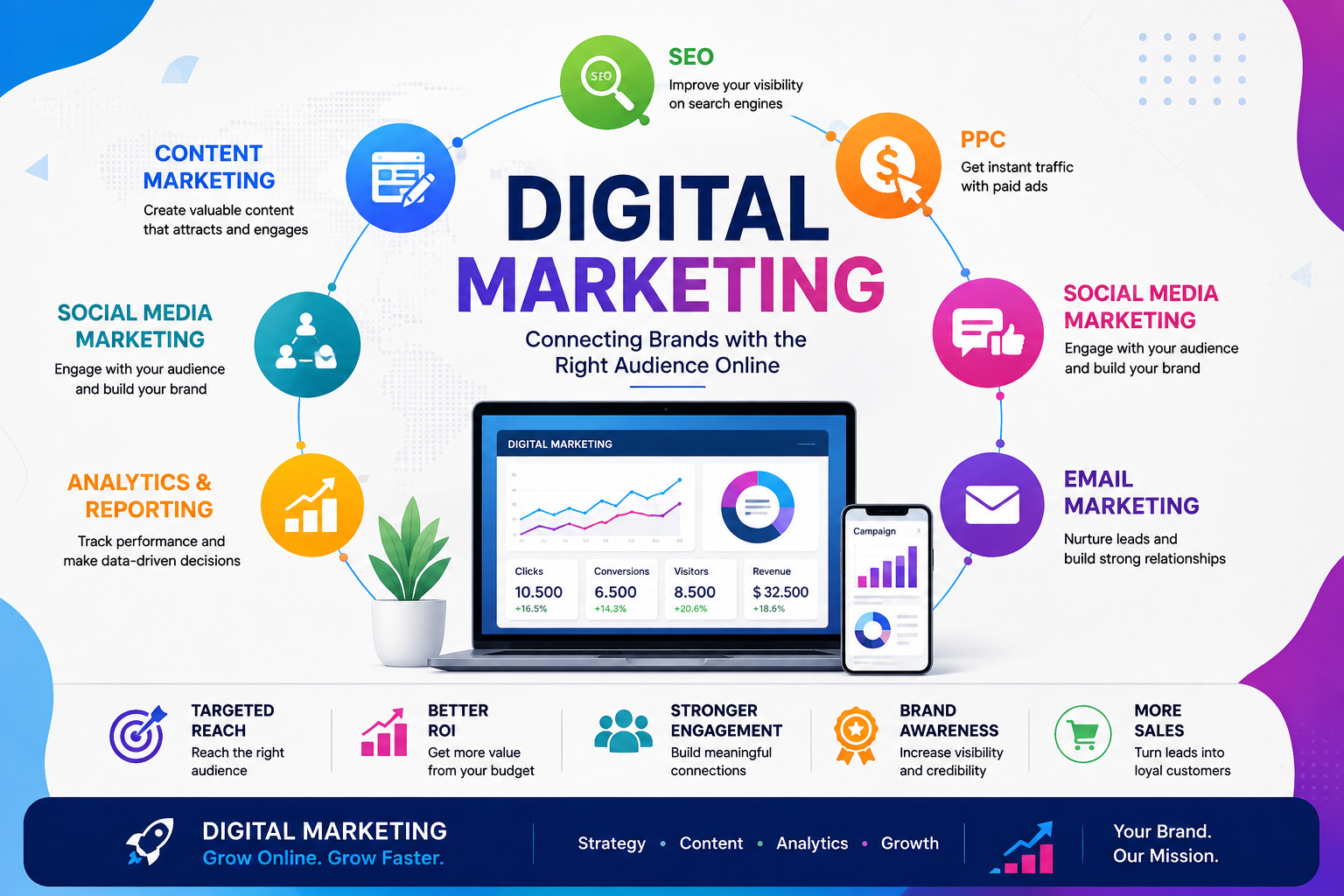
Digital marketing has become an essential part of growing a business in today’s connected world. As more people use search engines, social media, websites, email, and mobile devices every day, businesses have new opportunities to reach potential customers online. Digital marketing helps brands build awareness, connect with their target audience, generate leads, and increase sales through different online channels.
What Is Digital Marketing?
Digital marketing is the promotion of products, services, or brands through digital channels and online platforms. Instead of depending only on traditional advertising such as newspapers, television, or billboards, businesses can use digital platforms to reach specific audiences and measure campaign performance.
A successful digital marketing strategy combines multiple channels based on a company’s goals, audience, industry, and budget.
Main Types of Digital Marketing
1. Search Engine Optimization (SEO)
SEO helps websites improve their visibility in organic search results. It includes keyword research, content optimization, technical SEO, internal linking, and other strategies designed to make a website more useful and discoverable.
2. Pay-Per-Click Advertising (PPC)
PPC is a paid advertising model where businesses pay when users interact with their advertisements, depending on the campaign type. Platforms such as Google Ads allow advertisers to reach people based on searches, interests, locations, and other targeting options.
3. Social Media Marketing
Social media marketing uses platforms such as Instagram, Facebook, YouTube, LinkedIn, and others to build brand awareness and engage audiences. Businesses can share educational content, videos, product information, offers, and updates.
4. Content Marketing
Content marketing focuses on creating valuable and relevant content for an audience. Blog posts, videos, guides, infographics, social media content, and educational resources can help businesses build trust and communicate their expertise.
5. Email Marketing
Email marketing allows businesses to communicate directly with customers and subscribers. Newsletters, product updates, offers, educational emails, and personalized campaigns can support customer relationships and repeat business.
Benefits of Digital Marketing
One of the biggest advantages of digital marketing is audience targeting. Businesses can reach people based on factors such as interests, location, search behavior, demographics, and previous interactions, depending on the platform and campaign.
Digital marketing is also measurable. Businesses can analyze metrics such as website traffic, engagement, clicks, leads, conversions, and advertising costs. This data can help marketers understand what is working and where improvements are needed.
Another important benefit is flexibility. Campaigns can be adjusted based on performance, changing customer behavior, and business objectives.
How to Build a Digital Marketing Strategy
A strong strategy begins with clearly defining your target audience and business goals. Next, identify the platforms where your audience spends time and select the appropriate marketing channels.
Create useful and engaging content, optimize your website for search engines and users, and track important performance metrics. Regular testing and optimization can help improve your marketing efforts over time.
The Future of Digital Marketing
Digital marketing continues to evolve as technology and consumer behavior change. Businesses are increasingly exploring areas such as AI-powered search, AIO, automation, video marketing, personalization, and data-driven strategies.
The most successful brands will focus not only on visibility but also on providing useful experiences and building genuine relationships with their audiences.
Final Thoughts
Digital marketing gives businesses powerful ways to reach, engage, and convert their target audience online. From SEO and PPC to social media, content, and email marketing, each channel can play an important role in a complete online growth strategy.
For businesses looking to build a strong online presence, the key is to choose the right channels, create valuable content, understand the audience, measure results, and continuously optimize the strategy.
No responses yet