Pay-Per-Click (PPC) is one of the most effective forms of digital advertising for businesses that want to reach potential customers quickly. Unlike organic marketing methods, PPC allows businesses to place advertisements in front of people who are actively searching for products, services, or information. Advertisers generally pay when someone clicks on their advertisement, making PPC a performance-focused digital marketing strategy.
What Is PPC?
PPC stands for Pay-Per-Click. It is an online advertising model where businesses pay a fee when a user clicks on their advertisement. PPC ads can appear on search engines, social media platforms, websites, shopping platforms, and other digital channels.
Search advertising is one of the most common forms of PPC. For example, when someone searches for “digital marketing services,” sponsored results may appear at the top of the search results page. These advertisements can help businesses reach users who already have an interest in their products or services.
How Does PPC Advertising Work?
PPC campaigns generally begin with selecting relevant keywords, audiences, locations, budgets, and advertising goals. Advertisers then create compelling advertisements designed to encourage users to click.
When a user performs a relevant search, an advertising auction determines which ads may appear. Factors such as bid, relevance, landing-page experience, and ad quality can influence ad placement.
Once someone clicks the advertisement, they are directed to a landing page where they can take an action such as making a purchase, submitting a form, calling a business, or requesting more information.
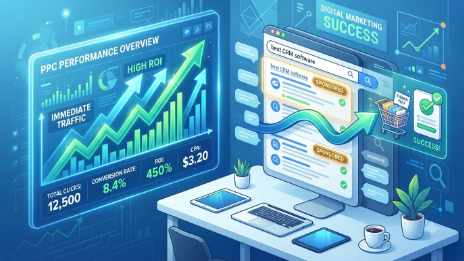
Benefits of PPC
1. Fast Visibility
PPC can help businesses appear in prominent advertising positions shortly after a campaign is launched. This makes it useful for promoting new products, services, offers, and websites.
2. Targeted Advertising
Businesses can target audiences using factors such as keywords, location, interests, demographics, devices, and other available campaign settings.
3. Budget Control
PPC campaigns allow advertisers to set budgets and manage how much they are willing to spend. This makes it possible to create campaigns for different business sizes and objectives.
4. Measurable Results
PPC provides valuable performance data, including impressions, clicks, click-through rate, conversions, and advertising costs. Businesses can use this information to improve campaign performance.
PPC vs SEO
PPC and SEO (Search Engine Optimization) are both important digital marketing strategies, but they work differently. PPC provides paid visibility, while SEO focuses on earning organic search visibility. PPC can deliver traffic quickly, whereas SEO often requires consistent effort and time to build sustainable organic visibility.
Many businesses use PPC and SEO together to create a balanced search marketing strategy.
How to Create a Successful PPC Campaign
A successful PPC campaign starts with clear objectives and relevant keyword research. Businesses should create highly relevant advertisements, use focused landing pages, monitor conversion data, and regularly optimize campaigns.
It is also important to test different headlines, descriptions, audiences, keywords, and landing pages. Continuous analysis can help reduce wasted spending and improve campaign performance.
Final Thoughts
PPC is a powerful tool for businesses looking to increase online visibility, generate leads, drive website traffic, and promote products or services. When combined with strong landing pages, effective targeting, compelling advertisements, and continuous optimization, PPC can become an important part of a successful digital marketing strategy.
No responses yet